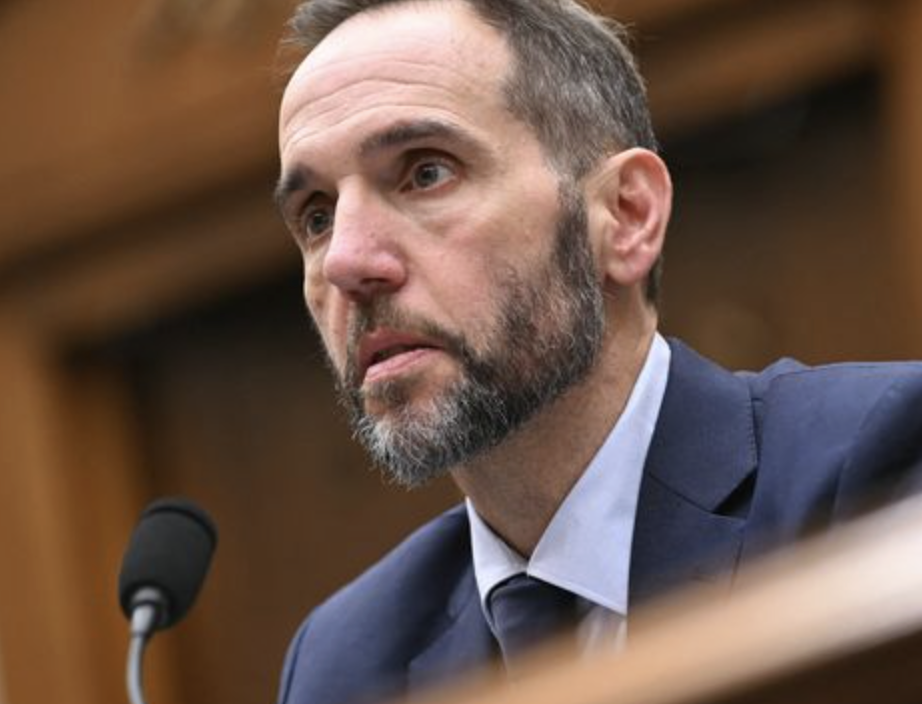
Jack Smith was the Special Counsel who investigated Donald Trump’s crimes - at least some of them. Smith stated plainly — multiple times — that he had proof beyond a reasonable doubt to convict Trump on both cases (election interference and classified documents) and believed he would have obtained and sustained convictions at trial. He also said co-defendants Nauta and De Oliveira were guilty. This is a former special counsel, under oath, saying a sitting president committed crimes he could prove in court.
Supporting testimony:
Q: At the conclusion of that investigation related to the interference in the lawful transfer of power following the 2020 election, when your office indicted Mr. Trump for his criminal scheme to overturn the 2020 election, did you believe that you had sufficient evidence to obtain and sustain a conviction against Mr. Donald Trump?
Smith: Yes.
Q: Did you believe that you had sufficient evidence to prove these charges beyond a reasonable doubt?
Smith: Yes.
Q: When your office indicted Mr. Trump for willfully keeping highly classified docs after he lost the 2020 election, did you believe that you had sufficient evidence to obtain and sustain a conviction against Mr. Donald Trump?
Smith: Yes.
On the co-defendants:
Q: Do you believe that Mr. Nauta and Mr. Oliveira were guilty of the crimes that they were charged with?
Smith: Yes, we believed that we had proof beyond a reasonable doubt for all the charges and that we would have gotten convictions at trial.
Q: Are you aware of any reason within the rules, protocols and regulations of the Department of Justice that that case should have been dismissed?
Smith: In my view, no, it shouldn’t have been.
On the strength of the case after the Supreme Court’s immunity ruling:
Smith: That ruling excised a certain portion of our proof. But all the charges we brought, we felt were still valid. We felt we still had a lot of evidence to support those charges… I still believed that there was substantial evidence that would allow us to prove the case beyond a reasonable doubt.
On Trump’s singular culpability:
Smith: The evidence here made clear that President Trump was by a large measure, the most culpable and most responsible person in this conspiracy. These crimes were committed for his benefit. The attack that happened at the Capitol, part of this case, does not happen without him.
On the trial strategy:
Smith: We would have presented what I viewed as very strong witnesses from each state to explain how the elections occurred in that state and why the outcomes were trustworthy and debunking various fraud claims that President Trump made. We would have presented the false claims that he made repeatedly, interspersed with debunkings to him, or other evidence that showed they weren’t true and that evidence got to him… The evidence that I felt was most powerful was the evidence that came from people in his own party who put country before party and were willing to tell the truth to him even though it could mean trouble for them.
Trump Knew He Lost — and Said So Privately
The most damning evidence on the election case. Smith identified two types of knowledge: (1) that Trump knew he lost the election, and (2) that the fraud claims he was spreading were false.
Supporting testimony:
Q: What evidence did you collect about Mr. Trump’s knowledge that he had indeed lost the election of 2020?
Smith: There are two types of knowledge — one that he lost the election and another that the things he was saying, the fraud claims, were in fact false. He was repeatedly told by people that the very fraud claims that would change the outcome were not true. When he was told by his campaign team in essence that if you can’t win Arizona you can’t win the election, and then he lost Arizona, he changed out that team and went with Giuliani and his group. We also had statements from other individuals — I believe it was General Mark Milley who said he was going to “leave this for the next guy.” There was another staffer who overheard him saying something to the effect of, you keep fighting regardless of whether you won or lost.
On Trump’s private admissions:
Q: Did President Trump ever acknowledge that he knew that he had actually lost the election?
Smith: This paragraph references different statements that he made in the presence of other people. One is that “it doesn’t matter if you won or lost the election, you still fight like hell.” And then the other was, “can you believe I lost to this effing guy?” — referring to Joe Biden.
On the false claims he kept making after being told they were untrue:
Smith: These would be false claims about dead voters. It would be false claims about underage voters. It would be false claims about illegal alien voters. The false claims were generally about urban centers where he had lost the vote in a particular state that was otherwise close by a lot. And these were claims that were rebutted by people around him who knew that they were false, and in many cases told him they were false.
The pattern of rejecting truth and embracing lies:
Smith: The pattern and the depth of the pattern and the length of the pattern was pretty damning evidence that he knew these things were false. He only brought fraud claims that involved states that he’d lost. He only approached people generally who had party allegiance to him. When he was told that a fraud claim wasn’t true, he didn’t stop making it.
The Sidney Powell example — calling her “crazy” then promoting her claims:
Smith: Sydney Powell was part of his team at the beginning of this conspiracy. Shortly after she began making statements that really nobody could credit, that were facially false… Trump at one point was on a call where he basically muted the call and said she was crazy. But then after that point, he continued to promote her fraud claims and lawsuits. He considered putting her as a special counsel, even though he’d admitted, you know, he used the word “crazy.”
On Trump’s deliberate pattern of rejecting inconvenient truth:
Smith: There was a pattern in our case where any time any information came in that would mean he could no longer be president, he would reject it, and any theory, no matter how far-fetched, no matter how not based in law, that would indicate that he could [stay in power], he latched on to that.
On being briefed about Pennsylvania absentee ballots in advance:
Smith: He was on notice in this election that in Pennsylvania he would be ahead in the vote count for a period of time and then when the mail-in ballots were counted, his lead would dissipate. He chose to represent that phenomena that he’d been briefed on, that was normal course of an election, that all sides knew that’s how it was going to be — he chose to present that as evidence of fraud.
The Pennsylvania Republican Party chair, Tavis, told Trump directly:
Smith: The chair of the Republican Party in Pennsylvania, very shortly after the election, disabused President Trump of the idea that the reason his vote total, his lead was going down was because of fraud. And he explained that’s how we all knew it was going to work with absentee ballots in the state of Pennsylvania, which we had very strong evidence that Trump had been briefed upon by his campaign staff.
Even Giuliani disavowed the claims under oath:
Smith: When we interviewed him, he disavowed a number of the claims. He claimed they were mistakes or hyperbole, even the claim about Ruby Freeman, where he basically destroyed this poor woman’s life by claiming she was a vote scammer.
The Fake Elector Scheme Was Recognized as Illegal — By Trump’s Own People
Supporting testimony:
Thomas Marino’s reaction to the scheme:
Smith: Thomas Marino — he was a former U.S. attorney, and he was a Republican, former congressman. He had agreed to be an elector for Donald Trump. And when he was presented with this idea of the fake elector scheme, my recollection of his reaction was that this was an attempt to overthrow the government, and it was illegal.
The Michigan basement incident:
Smith: On December 14th, when the electoral colleges meet, there were 16 fake electors in the basement in Michigan, and four of them tried to get into the Capitol to overturn the election… What the email traffic among co-conspirators showed is they were trying to mimic the procedures that are required by the Electoral Count Act, but they couldn’t mimic them. The email traffic on this started with, “we have to follow these procedures.” And then when it became clear they couldn’t follow all the procedures, it was like, “well, do the best you can to follow as many as you can.”
Electors were lied to about how their names would be used:
Smith: The electors were told that they would only be used in certain circumstances. And as President Trump and his co-conspirators became more desperate, they came up with even more obviously illegal ways to try to stay in power and it eventually devolved to “let’s just say that these are the electors” regardless of whether any court has said so, the governor has said so, or the people of the state have said so. They didn’t go back to electors and say, “hey, we told you we’re only going to use this if we won a lawsuit.” They just went ahead and used it.
The Pennsylvania pushback — “these people should be shot”:
Smith: In Pennsylvania, there was a text chain with some of the people carrying out this scheme for President Trump [when electors pushed back and wanted protective language]… basically ended with “these people should be shot” … and “we can’t let this snowball like this otherwise we’re going to have to do this in all the other states.”
A Georgia elector who would have been a powerful witness:
Smith: We had other electors who said, “I was told that this would only be used if we won in litigation”… I’m thinking of one witness in particular in Georgia who I thought would have been very powerful — “I would never have done this if I thought they were going to use my name to overturn the will of the people, just because one person said so.”
Giuliani’s revealing admission about party loyalty:
Smith: We asked him, “why did you say you were calling on your fellow Republicans?” And he said, “well, I wasn’t going to be calling Democrats about this, even some Republicans wouldn’t go along with this.” … There was one particular meeting that he attended where he got a hostile reception because he had no evidence to back up the fraud claims. And he said something to the effect of, “I thought we were all Republicans here.”
The seven targeted states:
Smith: Georgia, Pennsylvania, Wisconsin, Michigan, Arizona, New Mexico, and Nevada. New Mexico was memorable because he lost that by 10%.
Trump invited Michigan legislators to the White House — and they told him the truth:
Smith: On November 20th, Mr. Trump calls Republican legislators from Michigan to the White House and urged them to remove the Biden electors and replace them with electors that would elect Trump… The folks from Michigan — he invited them to the White House. They told him, “you lost because you underperformed with educated females.” They told him that when he brought them there.
Trump told DOJ officials to just back the lie:
Smith: We had evidence from the Department of Justice officials that Donald Trump said to them, “just say the election is corrupt and leave the rest to me and the Republican congressmen.”
The Classified Documents: Bathroom, Ballroom, and Obstruction
Supporting testimony:
The charges:
Smith: Counts 1 through 32 charge Donald Trump with willful retention of national defense information. The remaining counts relate to attempting to obstruct that investigation, whether it be moving boxes so that those boxes wouldn’t be found by an attorney who was doing a search of documents to return to the government, and also false statements by both Mr. D’Oliveira and Mr. Walt Nauta. And there’s also counts related to attempts to destroy video footage and delete security camera footage related to all three of the defendants.
The locations where top secret documents were kept:
Smith: These are some of Donald Trump’s boxes that were brought from the White House and then stored in various places. In this particular photograph, it shows them being stored on a ballroom stage at the Mar-a-Lago Social Club… These boxes were moved around to various locations where lots of people had access to them. After they were on the ballroom stage, they were in a business center and then moved to a bathroom and shower in the lake room. And you can see the shower curtain behind the boxes.
The document spill — classified material on the floor:
Smith: Mr. Nauta texts another employee and says, “I opened the door and found this” and attached two photographs that he took of the spill of documents… One of the classified documents that’s actually charged in the case is visible in this picture. I think it’s count eight. And this is a room where others had access to. Obviously, someone was able to go in there and spill this box of documents. So I think it shows how accessible these documents were and the sort of manner in which they were, the care with which they were kept.
The “beautiful mind boxes” — Trump’s personal curation:
Smith: Staff members referred to these documents as the “beautiful mind boxes,” and this wasn’t just one staff member. It was multiple staff members. They refer to the fact that Donald Trump — these were his boxes. They were exclusively his belongings in them. He had curated them and what was in them… Trump kept these incredibly highly classified documents in boxes with all different sorts of things of all different sorts of shapes and sizes — clothing, memorabilia, newspaper clippings.
Trump showed classified military attack plans to unauthorized people:
Smith: [From the indictment] Upon greeting the writer and publisher and his staff members, Trump stated, “Look what I found. This was [a senior military official’s] plan of attack. Read it and just show — it’s interesting.”
Q: Did the individuals that Mr. Trump shared this information with have a security clearance?
Smith: Paragraph 36 states that the PAC representative did not have a security clearance or any need to know classified information about the military operation.
The scale of the security breach — Mar-a-Lago’s exposure:
Smith: The club hosted more than 150 social events, including weddings, movie premieres, fundraisers. And those events together drew tens of thousands of guests… The Secret Service provided protection services to Trump and his family after he left office, but it was not responsible for the protection of boxes or their contents. The indictment states that Trump did not inform the Secret Service he was storing boxes of classified documents at Mar-a-Lago, meaning they didn’t know that they were protecting classified documents.
The classification levels at stake:
Smith: The FBI seized 102 documents with classification markings… A top secret document is information that reasonably could be expected to cause exceptionally grave damage to the national security. Secret is serious damage to the national security.
Whether all documents were recovered:
Q: Do you think that the FBI was able to retrieve all the classified documents that President Trump improperly retained?
Smith: I’m struggling because I can’t recall if that is in the final report… I don’t think I should answer that question.
Active, Deliberate Obstruction After the Subpoena
This is where Smith described the most “obstructive conduct.”
Supporting testimony:
The timeline of concealment:
Smith: Paragraph 53 references the fact that a grand jury subpoena was issued on the 11th of May and that two attorneys representing Donald Trump informed him of the subpoena and he authorized them to accept service. So he was on notice of the subpoena at that point.
The body man moves boxes immediately:
Smith: Eleven days later, Walt Nauta, who was in the parlance his body man, went into the storage room, which was the last place these boxes were, and left 34 minutes later carrying one of President Trump’s boxes. The next day is the day that Donald Trump met with his attorneys to discuss the subpoena.
Trump wanted to be there to review the boxes personally:
Smith: Donald Trump confirmed his understanding that one of those attorneys would return to the club on June 2nd to search for any documents with classification markings. Donald Trump indicated that he actually wanted to be there that day when he returned to look at the boxes… He had planned to depart Mar-a-Lago but he changed his summer plans to be there on the second.
64 boxes moved at Trump’s direction:
Q: How many boxes did Mr. Nauta remove from the storage room?
Smith: Between the 23rd of May and June 2nd, he removed at Donald Trump’s direction a total of 64 boxes and brought them to Trump’s residence.
Q: Mr. Nauta moved these boxes just a day after Mr. Trump met with his attorneys about responding to the grand jury subpoena. Is that correct?
Smith: Well, yes. He actually, the first day listed here is in paragraph 54 when he went in and left 34 minutes later carrying boxes.
The attorney’s limited search:
Smith: He looked through all the boxes that were in the room and located 38 documents with classification markings that he took out and put in a red folder and then taped up.
Trump directed deletion of security camera footage:
Q: Do the evidence show that Mr. Trump attempted to or tried to direct someone else to delete security camera footage at Mar-a-Lago?
Smith: Yes.
Q: Can you please describe what evidence showed that Mr. Trump directed someone to delete security footage?
Smith: It starts on paragraph 74, and it goes through paragraph 87.
The FBI search came only after all voluntary efforts failed:
Smith: [Trump] had an opportunity to return them when the National Archives first asked for them back… He also had another opportunity to return them when he was subpoenaed by the grand jury… And he did not return all the documents during that time… [He] was aware that at least some of these documents are highly sensitive documents.
Smith’s correction on the timeline:
Smith: One thing I just want to correct — the chronology we’ve gone through, all of those facts were not known to the FBI at the time of the search warrant. Many of them were, but for example, this last bit where we talked about attempting to delete the server, that was not uncovered until later.
Trump Caused January 6 and Refused to Stop It
Smith’s assessment: Trump “caused it, exploited it, and it was foreseeable to him.”
Supporting testimony:
The full statement on Trump’s responsibility:
Smith: Our evidence is that he, in the weeks leading up to January 6th, created a level of distrust. He used that level of distrust to get people to believe fraud claims that weren’t true. He made false statements to state legislatures, to his supporters, in all sorts of contexts, and was aware in the days leading up to January 6th that his supporters were angry when he invited them. And then he directed them to the Capitol. Once they were at the Capitol and once the attack on the Capitol happened, he refused to stop it. He instead issued a tweet that, without question in my mind, endangered the life of his own vice president. And when the violence was going on, he had to be pushed repeatedly by his staff members to do anything to quell it. And then even afterwards, he directed co-conspirators to make calls to members of Congress, people who were his political allies, to further delay the proceedings.
Trump knew his supporters had weapons — and told them to come through anyway:
Smith: His supporters were leaving their weapons outside the magnetometers because they couldn’t go through. And at some point, Mr. Trump said, “let them come through anyhow, because they’re not going to hurt me.” It was subsequent to that knowledge that some of these supporters were armed that he called on them to go to the Capitol.
Smith: I remember we interviewed different people who were near or around President Trump in that period of time before the Ellipse speech. And on that point, there were different recollections… Some people said what you said. Other people had more innocuous explanations. Clearly, people did stay outside the magnetometers. You can see that in the video of the crowd.
The Cassidy Hutchinson claims — what Smith’s team actually found:
Smith: Ms. Hutchinson, regarding that particular claim [about grabbing the steering wheel], was a second or even third-hand witness. She had heard other people talk about that. We interviewed the officer who was in the car. And that officer said that President Trump was very angry and wanted to go to the Capitol. But the version of events he explained was not the same as what Cassidy Hutchinson said she heard from somebody secondhand.
The evening of January 6 — Bannon and Epstein text thread:
Smith: We had a text thread between Bannon and Epstein that went through a lot of this period. On that text thread, the evening of January 6th, right around the time the senators’ calls were occurring at the direction of the president, there was an exchange where Epstein asked Bannon, “are you in touch with him?” And the answer was affirmative. And it was something to the effect of “he’s still on fire.” And that’s right at the same time that these calls are happening — after he refused to do what he could to stop the attack on the Capitol, after the tweet about Mike Pence.
Trump told DOJ officials to lie — and leave the rest to him:
Smith: We had evidence from the Department of Justice officials that Donald Trump said to them, “just say the election is corrupt and leave the rest to me and the Republican congressmen.”
The toll records showed Trump calling allies during and after the attack:
Smith: That violence started, the president refused to stop it. He endangered the life of his vice president. And he’s getting calls — not calls from Democrats, not calls from people he doesn’t know — calls from people he trusts, calls from people he relies on, and still refuses to come to the aid of the people at the Capitol. That’s very important evidence for criminal intent in our case.
Pence Could Have Changed History
Supporting testimony:
Q: What did Donald Trump want Vice President Pence to do to overturn the election results?
Smith: Ultimately, he wanted him to just hand him the election to say he won. There were different proposals that President Trump and his co-conspirators put to Mike Pence. But in essence, he wanted Mike Pence to impose his own choice about who should be president over the will of the American people who voted in the election.
Pence as evidence that Trump knew the truth:
Q: Is this yet another example of evidence that shows Mr. Trump knew or should have known that what he was saying to the American public was false regarding the election of 2020?
Smith: Yes. The vice president was one of several people saying he was not seeing the outcome-determinative fraud that Donald Trump was claiming.
What would have happened if Pence complied:
Smith: Well, thankfully, we don’t know. But I would say that he and the other people who stood up and said, “I’m not going to do that,” may have changed the course of history in terms of our country of having an election where someone took power in our country who didn’t actually win the election.
Pence’s courage during the attack:
Smith: He’s also someone who, when the attack on the Capitol happened, he wouldn’t leave. People wanted him to leave. And I think that reflects very well on him.
Smith’s assessment of Pence as a witness:
Smith: I think Mike Pence falls into the category I described before. He did something that was very hard to do. He went against his party. He paid a price for it. Someone like that putting country over party — I think he would have been an effective witness.
The Voting Rights Charge — Conspiracy to Disenfranchise
Smith added a charge the January 6 Committee hadn’t pursued: conspiracy to violate voting rights.
Supporting testimony:
Smith: The right to vote in a presidential election is one of the most sacred rights that Americans have, and in this particular case, we had strong evidence that the defendants sought to interfere with, obstruct, injure that right. We had evidence where President Trump was asking local officials to find 11,000 votes. When you find 11,000 votes, you’re diluting other people’s votes. We had evidence that they were targeting certain states and particularly certain parts of certain states, generally urban parts of states, to have those votes thrown out with no factual basis whatsoever. There’s even statements of the co-conspirators, at least one coming to mind now, specifically saying “we want to get rid of these votes, we want to subtract them.” And diluting the vote count in that way, there’s strong precedent for that being a violation of the statute that we charged.
The 60 court decisions:
Q: There were 60 federal or state court decisions rejecting claims of electoral fraud. To what extent did that figure into your analysis?
Smith: The lawsuits — we made clear in our indictment that there are proper ways to dispute an election. And asking for an audit, which President Trump did in only two of the states, that’s a way you can do that. Filing lawsuits, completely legal and proper. But in this case, those lawsuits were part of our proof that put President Trump and his co-conspirators on notice. The suits, their results, and the things that courts said in finding those suits without merit were one component of evidence that put him on notice that these allegations were false.
Pretextual lawsuits filed just to create the appearance of a dispute:
Smith: There was one lawsuit filed in New Mexico minutes before the deadline so they could say there was a dispute in New Mexico so they could proceed forward with the fake electors. There was another lawsuit in Georgia where one of the co-conspirators explicitly said in an email, “we’re on notice that the things in this lawsuit aren’t accurate, so we shouldn’t have the president sign a certification of this lawsuit.” And then they played with the language a little and had him sign a certification nonetheless.
Trump’s Retribution Campaign
Perhaps the most chilling current-day tension.
Supporting testimony:
Trump’s public attacks on Smith:
Q: Are you aware that he called you a “deranged lunatic,” “Trump hater,” and “psycho”?
Smith: Yes.
Q: Do you recall that on October 15th, President Trump, speaking to reporters standing next to the Attorney General and the Deputy Attorney General, said, “Deranged Jack Smith, in my opinion, is a criminal”? Then he talked about investigating Lisa Monaco, Andrew Weissman, and Adam Schiff, saying, “I hope they’re looking at all these people and I’m allowed to find out. I’m in theory the chief law enforcement officer.”
Smith: Yes, I’m aware of that.
Q: Are you aware that President Trump posted on Truth Social: “These thugs should all be investigated and put in prison, a disgrace to humanity. Deranged Jack Smith is a criminal”?
Smith: I know there were several posts like this.
Q: Do you think those were a direction to the Department of Justice to retaliate against you?
Smith: Yes.
The executive order targeting Smith’s lawyers:
Smith: They filed an executive order against the law firm and sought to withdraw the security clearances of my attorney.
Q: What do you think was his purpose for issuing this executive order?
Smith: To seek retribution against me.
Q: Is it also to chill people from having an association with you?
Smith: I think it’s to chill people from having an association with me.
Smith’s counsel: I just want to say for the record — we’re still here. Proud to represent Jack Smith.
The mass firing of career staff:
Q: Were members of the special counsel’s office fired?
Smith: Yes.
Q: Is it more than a dozen?
Smith: I believe so, yes.
Q: What justifications were given for terminating those staff members?
Smith: My understanding is no justification was given.
Q: Are you aware of any reason to target these individuals besides their work on your investigation?
Smith: None. I think it’s a travesty.
Q: Do you think that firing all of these public servants makes the country safer?
Smith: No… When you fire people who are career public servants serving both parties over many decades, you lose the expertise about how to do the job properly. That has an effect on the department today and will have an effect on the department for some time.
Smith on the threat to himself:
Q: Do you feel like you have a target on your back?
Smith: I believe that President Trump wants to seek retribution against me because of my role as special counsel.
Q: Would you be surprised if President Trump directed the DOJ to indict you?
Smith: No.
Q: Are you concerned about the safety of people who associate with you?
Smith: I would prefer if it’s all right not to talk about my safety because I think doing so could in fact endanger my safety and those of people around me.
Smith: I have no doubt that the president wants to seek retribution against me. I have no doubt that that’s the intent.
On witness intimidation during the investigation:
Smith: Donald Trump was making statements that were endangering witnesses, intimidating witnesses, endangering members of my staff, endangering court staff. Right around when the indictment was released, he issued a tweet saying, “if you come after me, I’ll come after you.” He called General Mark Milley a traitor and mentioned that in olden times, people would be put to death. As a result, the judge received vile death threats. Both the district court and the Court of Appeals found that his actions were causing witnesses to be intimidated and endangering people. The Court of Appeals also found that it would chill witnesses who had not yet come forward because they’d be afraid that they would be next.
The Muzzling of the Testimony Itself
A meta-tension throughout the deposition: Smith was legally constrained from discussing Volume 2 of his own report.
Supporting testimony:
Smith: There is an order of Judge Cannon, an injunction regarding Volume 2. I want to make very clear that I do not want to do anything to violate that injunction. Given that I have not seen, looked at Volume 2 since I submitted it to the attorney general almost a year ago, I do not have an exact recollection of what is in there. Unless something is in a public filing, I do not want to do anything that could even be remotely construed as violating that order.
He deliberately chose not to review his own report:
Q: DOJ did not let you review Volume 2 of your report?
Smith: It may well have been there, but I chose not to review it because I didn’t want any implication whatsoever that I was somehow violating the order by looking at it, not being a member of the department now.
The DOJ restrictions sent one hour before testimony:
Smith’s counsel: This morning, just over an hour ago, the Department of Justice sent us an email affirming its view that Judge Cannon’s order applies to Mr. Smith and that it precludes him from disclosing any non-public information that may be contained in Volume 2, including but not limited to interview transcripts, search warrant materials, business records, poll records, video footage, records obtained by grand jury subpoenas, attorney-client communications, and potential Rule 404B evidence.
Smith’s desire for public testimony:
Q: Would you like to have explained directly to the American people why these characterizations [of weaponization] are not true?
Smith: Yes, and again, particularly as to the career prosecutors and agents who have been vilified.
Q: Even after this deposition today, are you still willing to appear at a public hearing?
Smith: Yes.
The Pardons — Rewarding Violence and Conspiracy
Trump pardoned the very people who carried out the violence and the conspiracy.
Supporting testimony:
The violence that was pardoned:
Q: One of those rioters was Daniel Rodriguez, who multiple times plunged a stun gun into the neck of Officer Michael Fanone, causing Officer Fanone to suffer a heart attack. Are you aware of President Trump pardoning Mr. Rodriguez?
Smith: Not him specifically, but my understanding is he pardoned all the people who violently assaulted police officers that day.
Q: Patrick McCaughey III used a stolen police riot shield to crush Officer Daniel Hodges in a metal doorframe. Judge McFadden described him as a “poster child of all that was dangerous and appalling about January 6th.” Are you aware that he was pardoned?
Smith: I don’t know his specific name, but I know people like him who did things like he did were pardoned.
The second sweeping pardon — 77 individuals including co-conspirators:
Q: Were you aware that on November 10th, 2025, President Trump issued a second sweeping pardon proclamation granting full, complete, and unconditional pardons to at least 77 individuals related to efforts to overturn the 2020 election?
Smith: I was.
Q: Many of these were individuals identified as unindicted co-conspirators in your investigation?
Smith: I believe that’s correct.
Q: Some include Mr. Giuliani, who was willing to spread false claims to subvert the results of the 2020 election?
Smith: Yes.
The consequences are already visible:
Smith: I don’t think it’s really my opinion. We’ve already seen some of the people who were pardoned go on to commit other serious crimes, and I don’t have much doubt that in the coming months and years we’ll see more of that.
Q: Do you believe that pardoning individuals who committed violence on January 6th makes our country safer?
Smith: It does not, in my view.
Smith: I just don’t understand why you would pardon people who assaulted law enforcement. I think it sends lots of messages. One of the messages is to law enforcement — the people who defended the Capitol that day, in my view, are heroes. And I think pardoning people who assaulted them is wrong.
The Nauta and Oliveira cases were also dismissed:
Q: If I told you that it was after Donald Trump was inaugurated, would you agree with that?
Smith: I don’t recall, but that may well be true.
Committee counsel: I will represent to you that it was done by the Trump administration.