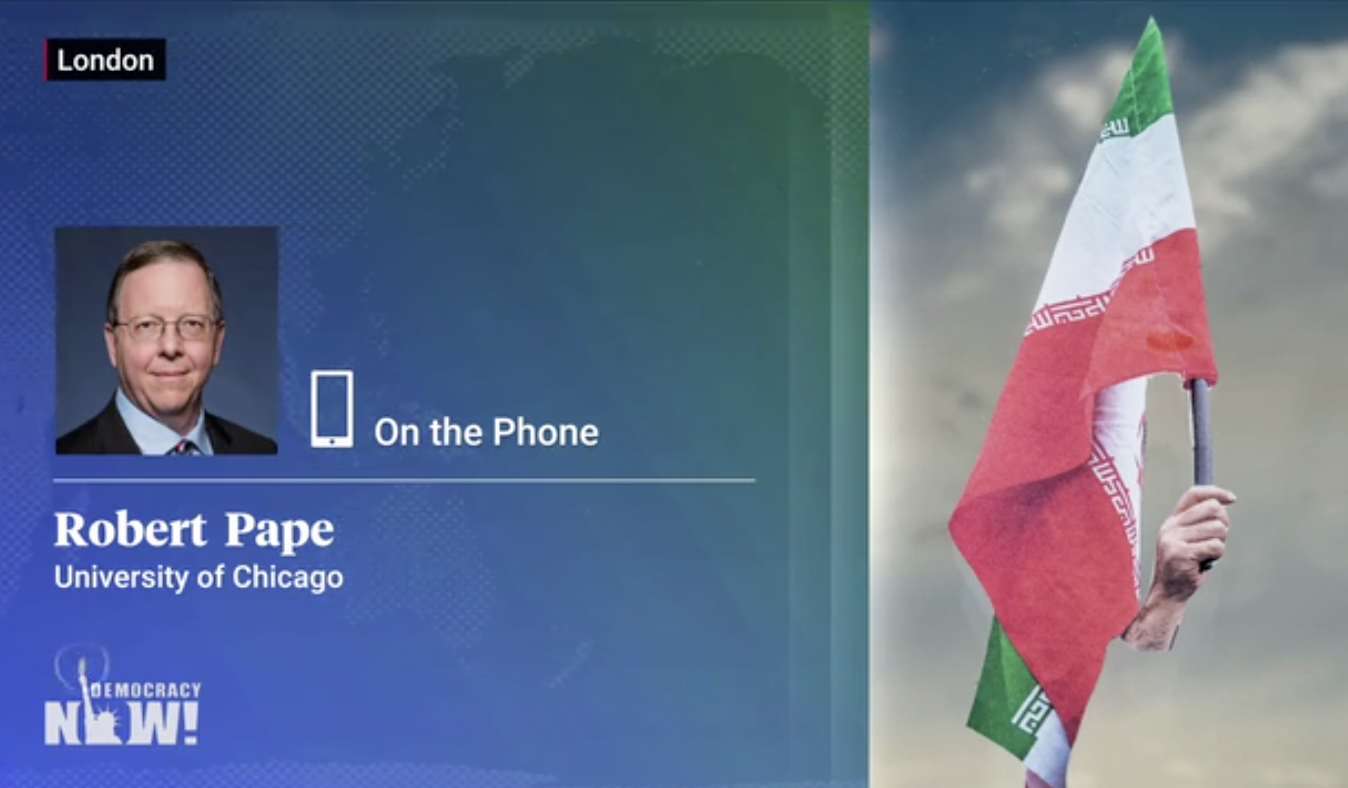
Forty days into the U.S.–Iran conflict, the war that President Trump promised would end in three days has instead handed Iran an unprecedented strategic advantage, according to University of Chicago professor Robert Pape.
Speaking from London on Democracy Now, Pape argued that Iran’s selective blockade of the Strait of Hormuz — through which 20% of the world’s oil flows — has transformed the country from a regional actor into an emerging “fourth center of global power,” alongside the United States, China, and Russia.
The mechanics are brutally simple: cooperate with Iran’s military, and your tankers pass safely. Resist, and your ships get sunk. Kuwait learned the hard way when one of its tankers was struck after attempting to run the strait. France took the other path — President Macron publicly pledged not to challenge Iran’s control, and a French tanker became the first European vessel to pass through.
Pape described the situation as an “escalation trap.” Trump’s initial air campaign, intended to collapse the Iranian regime, instead strengthened it. Iran seized the strait in a horizontal escalation, and after 40 days of enforcing its blockade, is now actively wielding — not merely holding — its newfound power. India has effectively bowed to Iranian demands. Gulf allies like Saudi Arabia and the UAE, once sheltered under American protection, are finding that shield worthless.
The consequences extend beyond oil. Pape warned that $75–100 billion in oil revenues flowing into Chinese banks could fund Iran’s transformation of enriched nuclear material into working weapons within months. A nuclear-armed oil hegemon at the mouth of the Persian Gulf would fundamentally reshape the global order.
Meanwhile, Defense Secretary Pete Hegseth declared the operation “a historic and overwhelming victory.” Pape called that a “victory narrative meeting escalation reality.”
As Vice President Vance prepared to join Witkoff and Jared Kushner in Islamabad for negotiations with Iran, Pape offered a sobering assessment: the deals on the table before the war are no longer enough. Iran’s price is rising daily, and in 35 years of studying international relations, he has never found a state that willingly surrendered world power.
“What would you give Iran to surrender world power?” Pape asked. “I don’t think they’re going to take a sucker deal at this point.”