Benjamin Hanil “Champagne” Song will spend the next century inside a federal cell, and on his way through the door he left the rest of us a message: you are next.
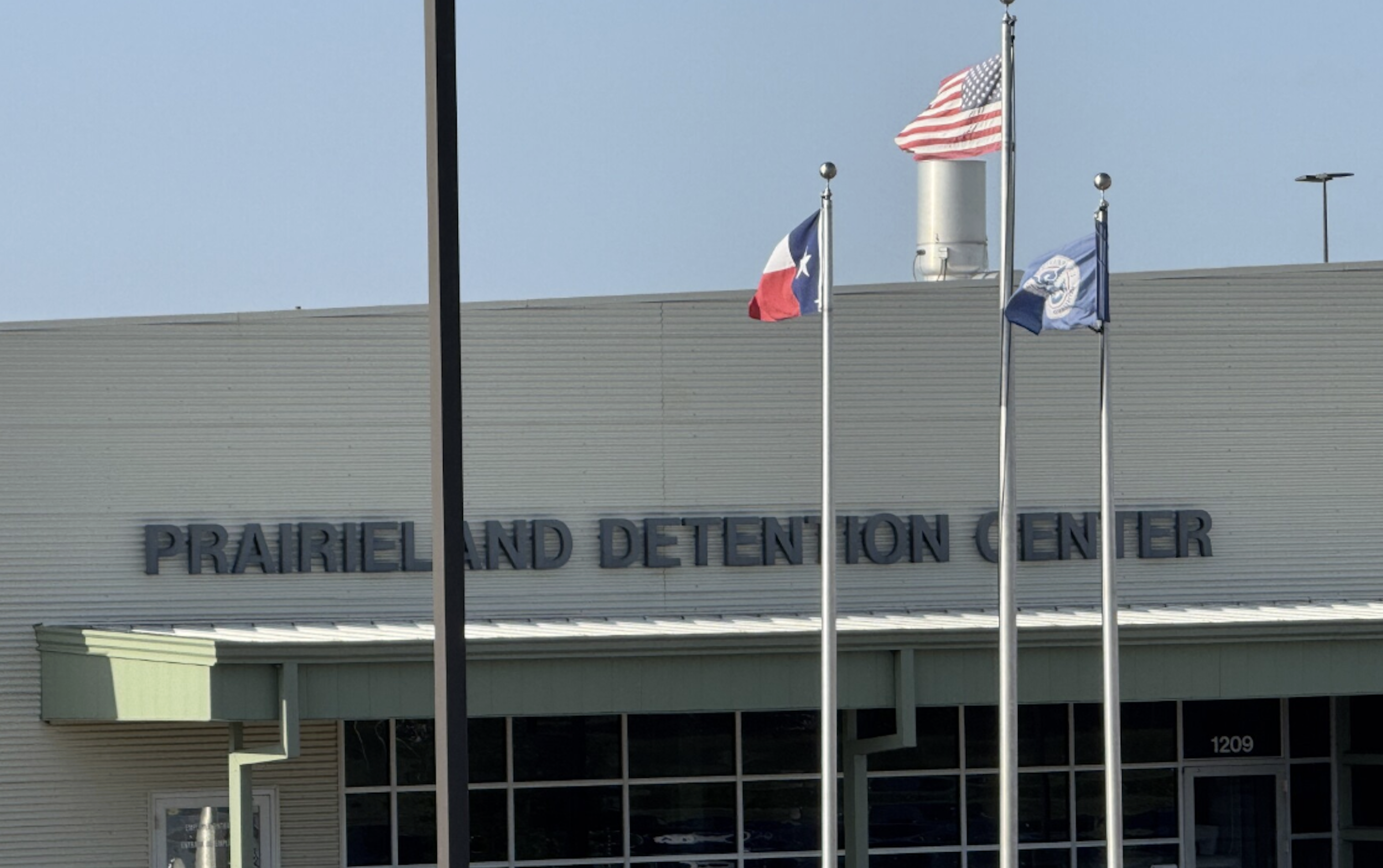
Song, a Marine Corps veteran, was sentenced on Tuesday to 100 years in federal prison, the heaviest term handed to the eight defendants punished that day over the July 4th, 2025 confrontation outside the Prairieland ICE Detention Center in Alvarado, Texas. Seven co-defendants drew 30 to 70 years apiece.
In a written statement released through the Prairieland Defendants support committee, Song rejected the portrait of a man consumed by hatred.
“I don’t hate. I don’t hate anyone,” Song wrote. “I don’t hate cops. I don’t hate Trump. I don’t hate Nazis.”
“But fear is not hate,” Song wrote. “Sadness is not hate. Wanting people to live is not hate.”

Song says he stood outside that detention center in high visibility clothing and fired to stop Alvarado police Lieutenant Thomas Gross from shooting an unarmed, fleeing protester.
“When I saw Lieutenant Thomas Gross stop pursuing and point his gun at the back of a running, unarmed protester,” Song wrote, " … I was terrified. As a firearms instructor and a United States Marine Corps veteran, I understood what I was seeing."
Song said he never intended harm.
“I never want to see anyone get hurt,” he wrote. “I never want to see good people, standing up for what they believe in, gunned down in the street. What we all saw happen to Renee Good and Alex Pretti is my worst nightmare.”
Song insisted that “it is impossible to say that I was trying to ambush anyone or planning any violence.” Looking back at the gunfire outside the detention center, Song said he was “shocked, and surprised, and saddened.”
He was thankful for what did not happen.
“I am so grateful for what didn’t happen,” he wrote. “I am so grateful that we are not here mourning another death and tragedy.”
If the government charged a man with attempted murder, won a conviction, and locked him away for 100 years over a near fatal wounding, where are the hospital records?
The Prairieland defense committee’s prior reporting describes Gross as having sustained minor injuries and as having been released from the hospital shortly afterward, and states that authorities have still not provided the hospital records to justify their claims, eight months on.
That account sits in plain tension with the trial testimony of a neck wound and an airlift. The documentation that would reconcile a quickly released patient with a near fatal shooting has not been disclosed. The government carried the burden. Where is the proof of how grave the wound actually was?
It was a rigged trial.
“First, they covered up and hid evidence,” he wrote. “Second, they banned every Black juror so that no one would question the police. Third, they told me I had no right to protect myself or anyone else and they told me I wasn’t even allowed to say the word: self-defense.”
Song’s statement wasn’t just about his case. He had a message for all of us, the people who think none of this touches their lives.
“Whatever is taken from me is taken from you,” Song wrote. “It may be these 22 strangers now, but it will be you tomorrow.”
Song said that the people arrested on that day are being collectively punished for who they stood next to. He does not hedge.
“Now, 22 people have been arrested, have been persecuted, have been tortured, for what? For nothing,” he wrote. “None of these people really did anything. And none of these people have anything to do with what happened with me. This is wrong. This is mass punishment. This is collective punishment. This is guilt by association. This is injustice.”
His argument is that once the government can prosecute protesters as terrorists, the precedent will swallow people who never showed up to a protest at all.
Song reaches back to 1895 to make his case, quoting the white supremacist U.S. Senator Pitchfork Ben Tillman on how power gets seized “by fraud and violence.” Then he draws the line to the present: “This is how men take power over others. By injustice, by fraud and violence.”
“Injustice,” Song wrote, “has always been dangerous.”
Label anyone a “terrorist” and the government has discovered it can do almost anything with them.
This case marks the first time the Department of Justice has brought terrorism charges tied to alleged antifa activity.
Prosecutors called Song the organizer of an “antifa cell” and branded the night a terrorist attack.
Song says the label is the whole game, and that what the government truly wants to bury is an idea. He wrote that on June 9th the President of the Southern Poverty Law Center testified that hate has migrated into the government.
“This idea that they hate is the very idea of being against fascism,” Song wrote. “What kind of people are not against fascism?”
Renee Good and Alex Pretti run through the statement like a refrain. Song lists them in a litany of the dead: “Another Alex Pretti. Another Renee Good. Another Botham Jean. Another Manuel Teran. Another Atatiana Jefferson. Another Philando Castile.”
Song’s 100 years will get cited from both directions: by the Justice Department as proof it will crush organized political violence, and by Song and his defenders as proof that the state has learned to call a protester a terrorist and a courtroom a foregone conclusion.
Song bet his statement that you would look away because you think you are safe. He closed by telling you he is not afraid for himself.
“I don’t fear for myself. I fear for all of you,” he wrote. “What will you do in this time of great failures and great injustices? What will you do? How will you help each other? How will you help yourselves?”
–
Song’s complete statement:
I don’t hate. I don’t hate anyone. I don’t hate cops. I don’t hate Trump. I don’t hate Nazis. My beliefs are composed thus:
First, that we should help each other.
And second, that we should protect one another.
I never want to see anyone get hurt. I never want to see good people, standing up for what they believe in, gunned down in the street. What we all saw happen to Renee Good and Alex Pretti is my worst nightmare.
It was the kind of thing I had feared for a long time, after dealing with officers who could be reckless, who could be bullies, who could be violent. But fear is not hate. Sadness is not hate. Wanting people to live is not hate.
So, when I was standing in the street on July 4th, 2025, in plain view with reflective safety strips and high visibility clothing, what I saw right in front of my eyes was my worst nightmare.
When I saw Lieutenant Thomas Gross stop pursuing and point his gun at the back of a running, unarmed protester, like he testified, I was terrified. As a firearms instructor and a United States Marine Corps veteran, I understood what I was seeing. I knew what it meant for someone to lean forward into a gun, like he testified, to prepare for recoil.
As the evidence shows, I did not want to hurt anyone. I never had the intent to hurt anyone. I tried my best to avoid hurting anyone. It is impossible to say that I was trying to ambush anyone or planning any violence. I was shocked, and surprised, and saddened. I am so grateful for what didn’t happen. I am so grateful that we are not here mourning another death and tragedy. Another Alex Pretti. Another Renee Good. Another Botham Jean. Another Manuel Teran. Another Atatiana Jefferson. Another Philando Castile.
Now, 22 people have been arrested, have been persecuted, have been tortured, for what?
For nothing.
None of these people really did anything.
And none of these people have anything to do with what happened with me.
This is wrong. This is mass punishment. This is collective punishment. This is guilt by association. This is injustice.
Back in 1895, the white supremacist and U.S. Senator, Pitchfork Ben Tillman, gave a speech to the Constitutional Convention of South Carolina on how to use injustice to take power. He said, “how did we recover our liberty? By fraud and violence.” We tried to overcome the 30,000 majority by honest means which was a mathematical impossibility. After burying these indignities for eight years, life became worthless."
This is how men take power over others. By injustice, by fraud and violence.
That history matters because injustice has always been dangerous. It does not only harm the person standing in court. It spreads. It teaches people to be afraid. It teaches people that the government can decide who is guilty first and look for reasons afterward.
First, they covered up and hid evidence.
Second, they banned every Black juror so that no one would question the police.
Third, they told me I had no right to protect myself or anyone else and they told me I wasn’t even allowed to say the word: self-defense.
As you heard at the trial, they tortured their own witnesses. American citizens were tortured and terrorized and medically neglected. Three men died in jail last week, by the way. And now, a 24-year old has had a heart attack. A 58-year-old woman said she would die in this case. Mothers, fathers, teachers, students, package workers, programmers and engineers persecuted and tortured in this case.
People are being treated as if their lives do not matter. All of this is bigger than me. I know I am the person standing here. I know I am the person being judged. But I also know that a case like this can become a warning to everyone else: that if you speak, if you protest, if you try to protect someone, if you are associated with the wrong idea, you can be turned into a symbol instead of treated like a human being.
Nothing saddens me more than when I think about all of these different people and their different families and communities, and how they have suffered, and how unfairly they have been treated, just like me.
Whatever is taken from me is taken from you.
It may be these 22 strangers now, but it will be you tomorrow.
On June 9th of this year, the President of the Southern Poverty Law Center testified that hate has migrated into the government. Into the government. The hate is right here.
The government, in it’s secret motion to give me a life sentence, calls me the embodiment of Antifa. What does that even mean? I am not a member of a group called Antifa. I am not part of any terrorist organization. There is no group called Antifa. Everyone knows that, but this government is so blinded by hate, they’ve arrested 22 good people for nothing. They want to bury me with an idea. This idea that they hate is the very idea of being against fascism.
What kind of people are not against fascism?
What kind of people are not against the hate and war and genocide and concentration camps that the Nazi’s brought upon the world?
What kind of people would not agree to “no kings” and “no Fuhrers?”
The hate has migrated into the government. Now that hate is taking power over me. It is taking power over you, over your words and your ideas.
When will you be called a domestic terrorist, too?
When they killed Renee Good and Alex Pretti, they went on TV and they called them domestic terrorists, the same day, within the hour.
When will that happen to you?
When I was staying in my home city of Dallas for 11 days, I did fear then I might die at any moment from a government that I think is hateful and vindictive. I did not run because I wanted to escape responsibility. I stayed because I wanted to survive long enough to do the right thing.
I don’t fear for myself. I fear for all of you.
What will you do in this time of great failures and great injustices? What will you do?
How will you help each other?
How will you help yourselves?