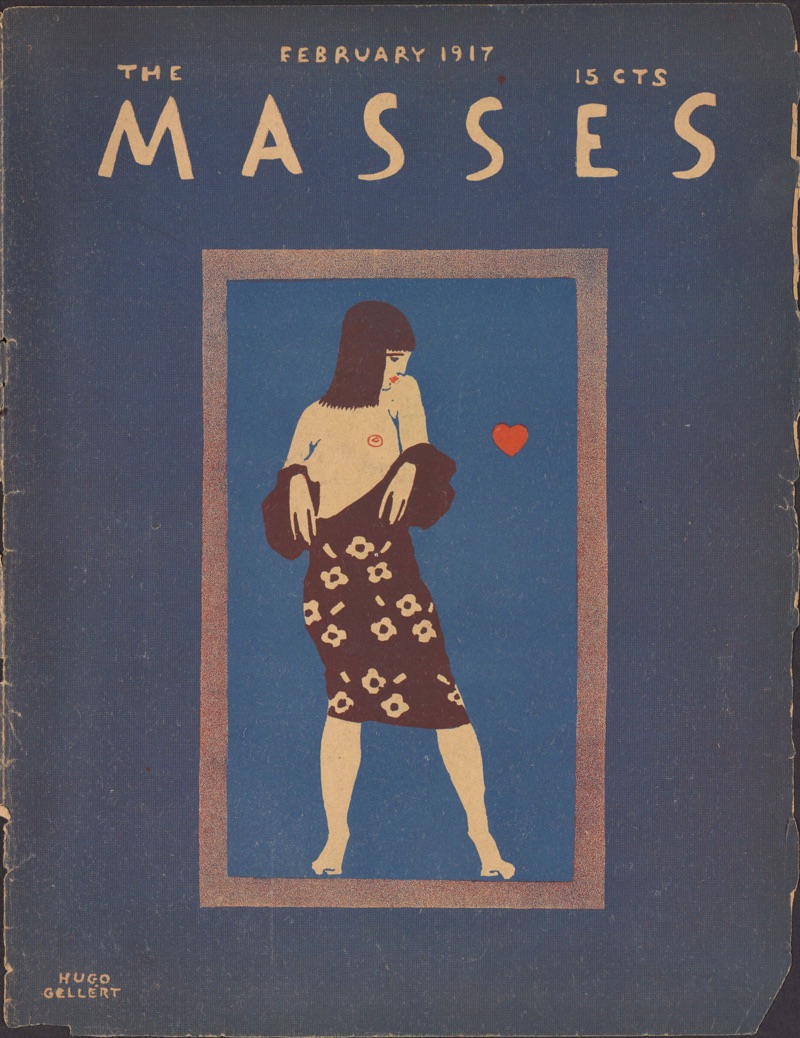
In the February 1917 issue of The Masses, Vol. IX, No. 4, socialist discourse permeates each page, offering a compelling snapshot of the era’s progressive sentiments. This monthly publication serves as a platform for various voices advocating for labor rights, peace, and artistic expression that challenges the status quo.
The issue begins with a powerful editorial denouncing U.S. intervention in World War I, urging readers to resist the call for militarism and instead champion international solidarity among working-class people. This stance underscores The Masses’ commitment to global socialist ideals, demonstrating the magazine’s role as an influential voice in the anti-war movement.
Artistic contributions further strengthen the issue’s message, with several pieces showcasing powerful imagery that confronts political and social issues. A notable woodcut by board member Boardman Robinson depicts workers striking against a monstrous capitalist figure, reinforcing the magazine’s unwavering support for organized labor.
Elsewhere in the issue, poetry and prose pieces continue this theme of resistance and solidarity among the working class. A poem by John Reed, for example, eloquently describes workers as “the children of the earth” who will rise up against oppression, reflecting the magazine’s commitment to promoting social justice through art and literature.
Overall, The Masses, Vol. IX, No. 4, offers a compelling look into the world of early 20th-century American socialism, showcasing the movement’s unwavering stance against militarism, its support for organized labor, and its use of art as a means to promote progressive ideals. The issue serves as a testament to The Masses’ role as a vital voice in the growing call for social change during this tumultuous period in history.