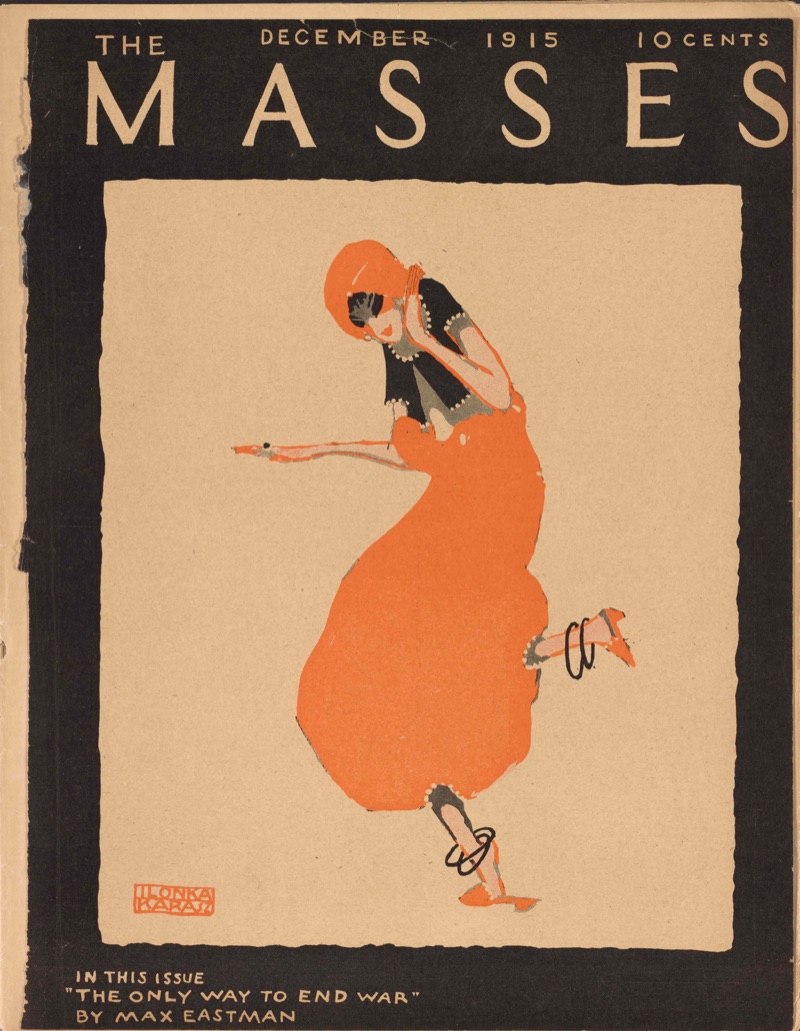
This issue of The Masses, Volume VIII, Number 2, from December 1915, delves into the complexities surrounding war, peace, and social reform. Central themes include the disposition of European people towards war, the instinctive tendencies of pugnacity and gregariousness, and the limitations of cultural or calculative suppression in altering these deep-rooted characteristics.
Max Eastman, a prominent figure in American socialism, argues against the notion that these bellicose and patriotic dispositions can be entirely eradicated through education or “hard thinking.” Instead, he emphasizes their organic origins and the precariousness of any cultural suppression efforts, as they would require an almost unanimous weight of social tradition to persist.
Additionally, the issue explores the futility of war from a commercial and cultural perspective, with references to the devastating impact it has on European economies and cultures. Articles discuss the commercial and cultural irrationality of conquest in modern warfare, aiming to dissuade popular support for conflict and promote peace initiatives instead.
Overall, this issue underscores the profound influence of our hereditary nature on human behavior and the difficulties in altering deeply ingrained tendencies like pugnacity and patriotism. It provides a compelling case for understanding the complexities involved in social reform and peacebuilding efforts, highlighting both the potential for progress and the persistent challenges that must be addressed to achieve lasting change.