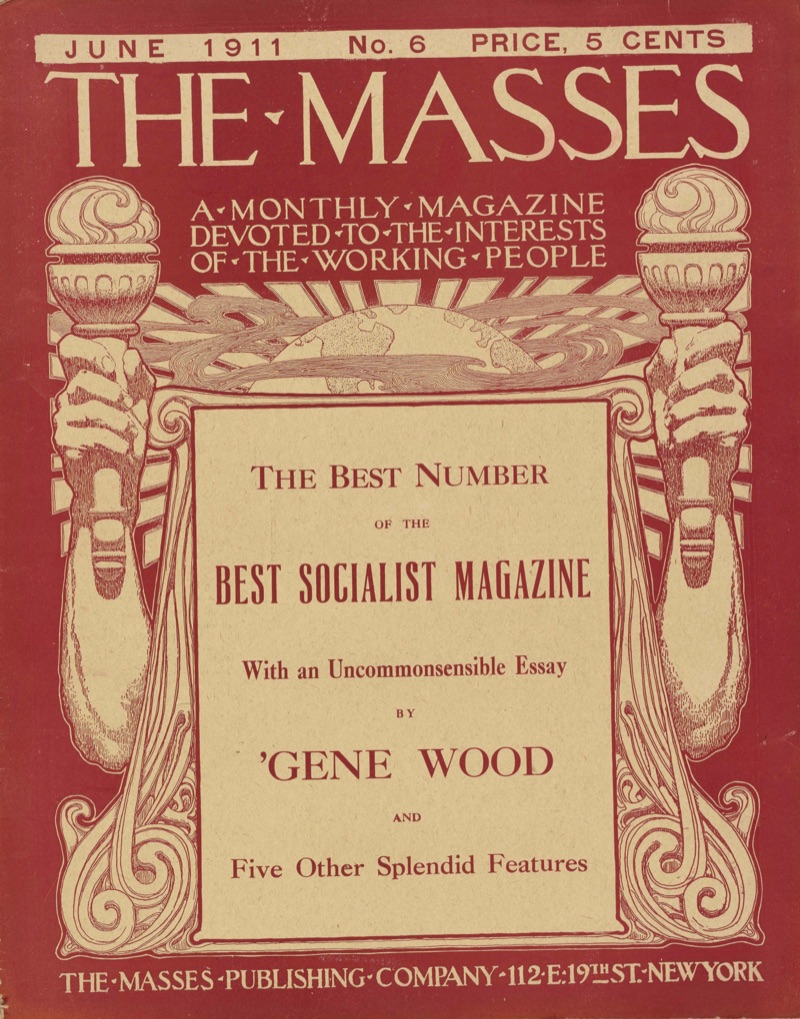
In this issue of The Masses, Vol. I No. 6 from June 1911, readers encounter a fusion of social commentary, political analysis, and artistic expressions that reflect the spirit of American socialism during the early 20th century. The magazine’s content is characterized by a progressive stance, challenging the status quo and advocating for change, particularly in relation to labor rights, government corruption, and imperialism.
One prominent theme in this issue is the critique of capitalism and its effects on the working class. Articles such as “The Boy Scout Movement: Seen by a Workingman” express concern about the exploitation of workers by corporations and the influence of big business on various aspects of society, including education and recreation. Similarly, the short story “Help Us!” presents a satirical portrayal of a working-class man’s disillusionment with capitalist values, as he contemplates the threat posed by the Boy Scout Movement, which promotes discipline and organization, but ultimately serves to suppress individuality and foster a subservient workforce.
Another significant theme in this issue is the focus on revolutionary movements abroad, particularly in Mexico. “Tomorrow in Mexico” forecasts the impending revolution and disintegration of the Diaz regime, marking a shift towards a more democratic and equitable society. The article provides insights into the growing consciousness of the Mexican middle class, who are determined to assert their power and challenge the dictatorial rule of General Diaz.
In conclusion, this issue of The Masses serves as a testament to the socialist movement’s commitment to social justice, workers’ rights, and anti-imperialism. Through various forms of expression—articles, short stories, and illustrations—it challenges the dominant capitalist system and advocates for change, both domestically and internationally. The magazine provides a platform for critical discourse and offers a glimpse into the progressive ideals that shaped American socialist thought during this period.