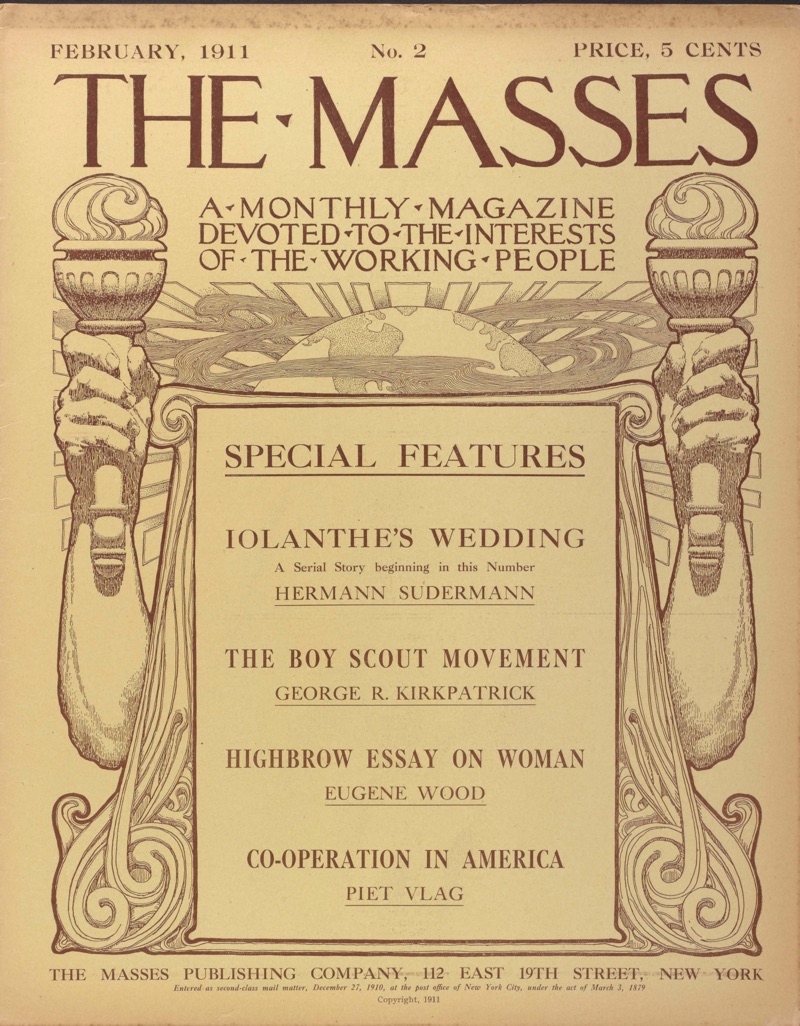
In the February 1911 issue of The Masses, Volume I, No. 2, the focus is on the burgeoning cooperative movement in the United States and its potential impact on American society. This issue highlights the efforts to establish distributive co-operatives as a viable means for working people to bypass middlemen and directly purchase goods at wholesale prices.
The magazine delves into a promising new plan for distributive co-operation, which involves local communities forming organizations and purchasing goods in bulk from wholesalers. This approach eliminates the need for retail stores and allows consumers to save up to 25% on their purchases. The article emphasizes the simplicity of this method and its potential to greatly benefit small cities.
Another significant aspect discussed in this issue is the relationship between the American Wholesale Co-operative and retail stores, illustrating how both entities work together to provide benefits to consumers by declaring wholesale profits as dividends. The magazine also addresses criticisms suggesting that the cooperative movement may not be successful due to highly developed trusts and insufficient working-class capital. Despite these concerns, it remains optimistic about the eventual realization among American workers that investing their savings in co-operatives is advantageous over traditional banking options.
Overall, this issue of The Masses highlights the emergence and evolution of the cooperative movement in the United States, with a particular emphasis on distributive co-operation as a potential solution for working people to combat trusts and gain economic independence.